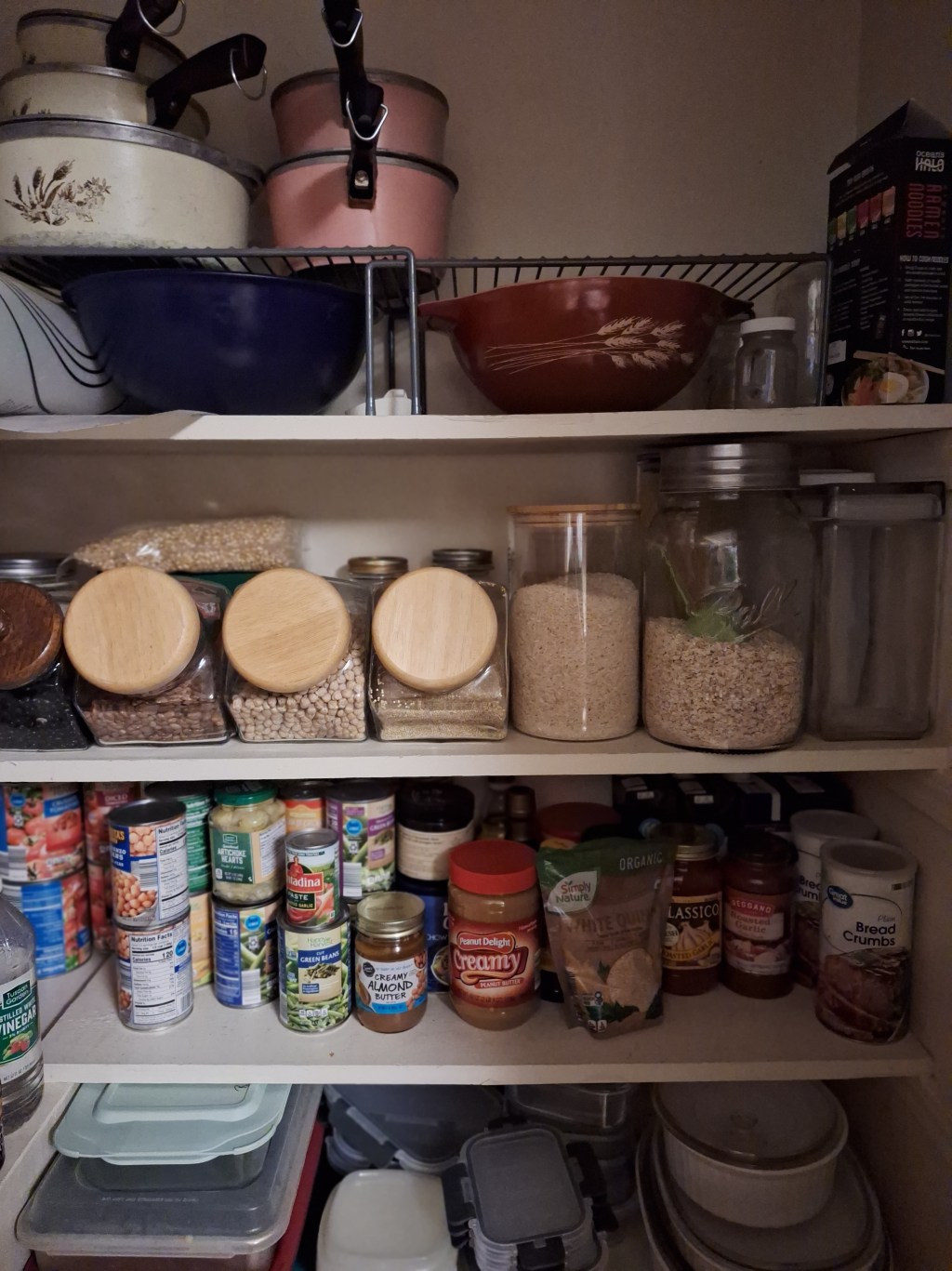
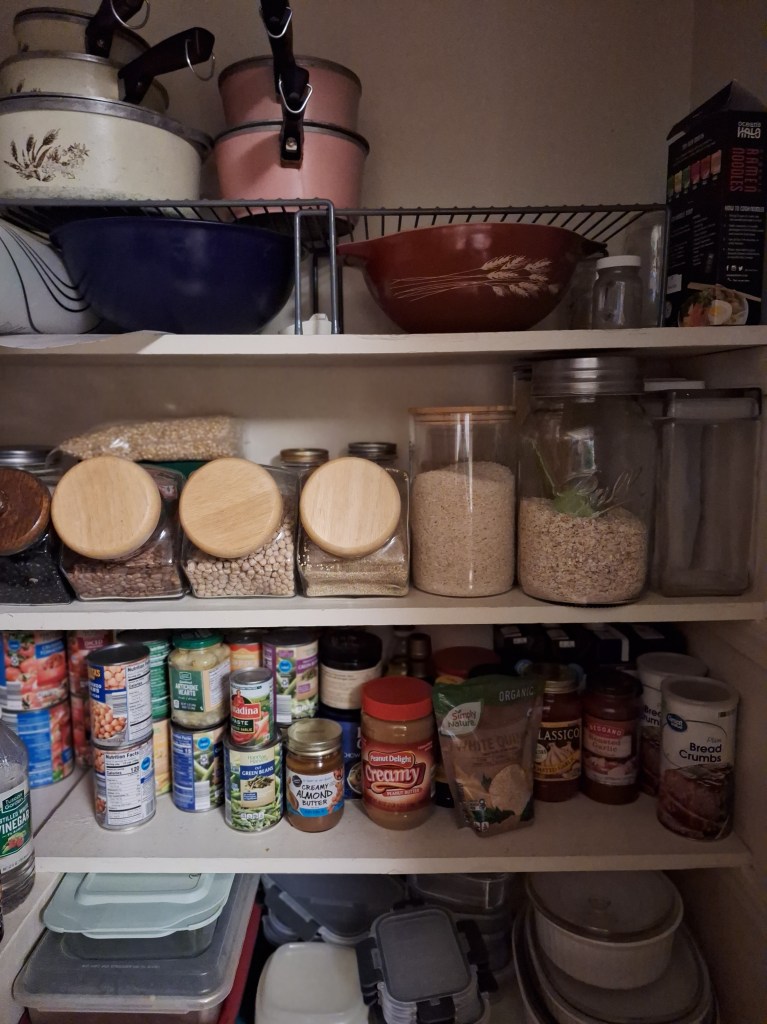
At some point in each of our lives we experience money being tight. Some times this is while you’re in college, it might be when they move to a new town or city, it might when they are newly married, or it could even be when they are in between jobs. Personally, I experienced a period of unemployment in 2014 while I was living in Kansas City working on my graduate degree. My income that year came through substitute teaching which worked with my class schedule. It was a way to tide me over while I was looking for something that would be more permanent. Although there was an income it wasn’t consistant, making budgeting nearly impossible. During that time I learned essential lessons about what I needed to keep in my pantry verses what I was used to having.
I’m going to share my list of “Must Haves.’ These are things that I regularly keep in my pantry to this day even with a consistant job that allows me to budget my food expenses.
Pantry Items: Baking
- Flour
- Sugar (regular and brown)
- Baking Powder
- Baking Soda
- Cocoa Powder
- Vanilla
- Salt
- Yeast
- Dried Beans (pinto, black beans, garbonzo)
- Oatmeal (quick oats, not the packets)
- Corn Starch
- Powder Sugar (nice to have, but you can survive without it)
- Oil (vegetable, lard, coconut – your preference here)
Pantry Items: Packaged/Canned Goods and Spices
- Crushed Tomatoes
- Canned Diced Tomatoes
- Canned vegetables
- Broth or Boullion
- Dried Pasta
- Peanut Butter (or if you prefer almond butter)
- Rice
- Pepper
- Red Pepper Flaes
- Basil
- Rosemary
- Thyme
- Cinnamon
- White Vinegar
- Coffee (only if you like to drink it)
- Tea (Once again, only if you drink it)
Pantry Items: Meat
- Whole Chicken
- Ground Turkey
- Beef Roast
- Bacon (pork or turkey – if you really like to have it. I opted for Turkey bacon back in the day, since it was significantly cheaper)
- Soy Sauce
Pantry Items: Vegetables
- Potatoes (whatever is available and most afford about – most likely, yukon gold or russet)
- Onions
- Carrots
- Celery
- Garlic
Pantry Items: Dairy
- Milk (whatever you prefer – I’m a 2% girl, myself)
- Block Cheese
- Heavy Whipping Cream
- Stick Butter
This was my shopping list at one point, and in many ways it is still the list of tings that I almost always will have on hand. Admittedly, my list has changed and adjusted over the corse of the last nine years as I have added different recipes to my knowledge base, learned to make sourdough, jam, and curry; however, with my pantry properly stocked I know that I will always have a fall back plan.
I regularly have these conversations with college students. When they make the choice to move off campus and realize that wifi, trash, laundry, meals aren’t included in the rent it doesn’t take long to fall into the Ramen noodle trap (and I happen to like the occasional Ramen). What you put into your body matters, and effects your general outlook. Learning how to manage a food budget gives a lot of freedom, and as you’ll see from my lists below, it isn’t all convenience food or instant packets. You can manage on a small budget, and as you develop skills in the kitchen, you can expand what you are making and begin to radically diversify your menus.
But now the question is: how exactly is this basic list so versital? I’m glad you asked! One way that the list adds versitility, is that you can make a lot of different, basic meals. Take a look at the baking, and vegetables, and packaged/canned food lists. With that those lists you could make the following and probably more if you’re creative (occassionally including a selection of meat): vegetable soup, beef or chicken stew, chicken and dumplings, chicken pot pie, beef pot pie, beef soup, cicken and rice, Korean Beef with rice, and different curries.
You can also learn some new skills by utilizing the list. I learned how to work with beans. That opens the door to a variety of different vegetarian meals (by the way, utilizing beans over meat does save money). If you don’t know how, you can learn to bake bread. In my case, this was a skill that I already had, so it was a matter of baking regularly so I didn’t have to buy it. I made cakes, biscuits, cinnamon rolls, pancakes, even doughnuts on occasion, etc. so I didn’t have to buy any of it. And by buying block cheese over shredded it was a) cheaper, and b) allowed me to do more. I would also make the investment in a beef roast. This will not work for everyone, but what I would do was split the roast ito three or four parts – it was just me afterall – and freeze it. Then I could use it for stir fry, soup, sandwiches, or a roast (surprise)! And by portioning up what could easily be an expensive item, I knew I would get multiple, different meals from it
And, I’m just going to say it, learn how to roast a chicken. A whole chicken isn’t that expensive, and like the beef roast, it can be portioned up after it’s cooked. You could even learn how to make your own broths – then you don’t have to worry about buying it or purchasing bouillon.
Cost – if money is really tight, you might not be able to build your pantey quickly. But you can begin to stock some of these items. What you can do is think about where you shop. For me, most of the baking goods and canned goods can be found at my local Dollar General. The rest can be found at an Aldi if you live near one. Otherwise, you can get it from your local grocery store. In 2014, I could purchase a month of groceries for right around $100-$125. Now, if I were to shop the same way, it would be more -actually closer to $200 now. If you cut somethings out, and do more scratch cooking you could lower the cost.

 Road Trippin With Rachael
Leave a comment