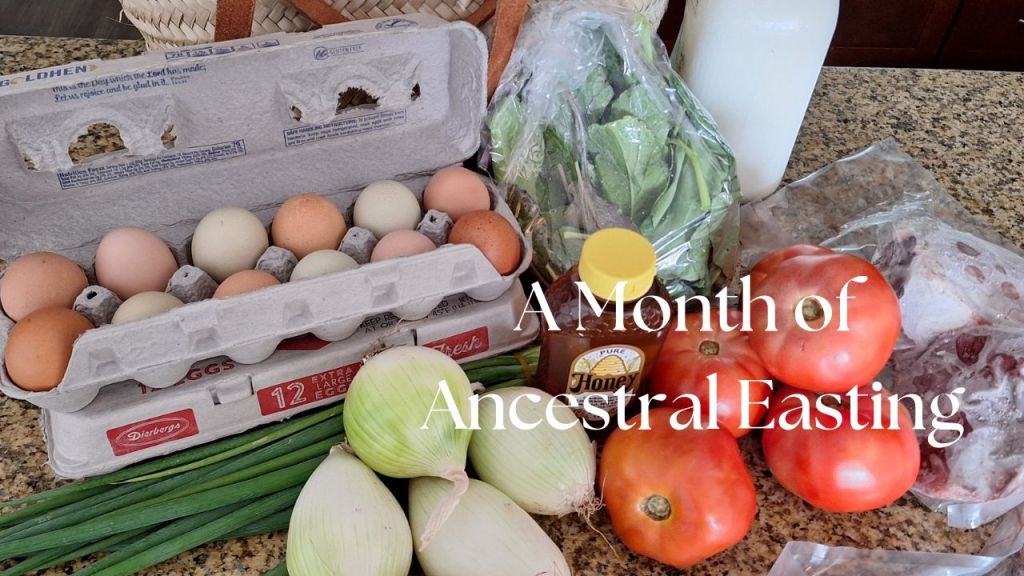
Before moving to the St. Louis area, I happend upon a podcast that was all about ancestral eating. Needless to say, I was fascinated by the idea of going to the market or straight to the farmer for food, raw milk, fermentation, and scatch cooking.
As I have spent the last few years figuring out my nutritional needs, and what works best for me, I have been moving towards a whole foods approach to my overall diet and lifestyle. I’ve been learning to make more and more of my food frrom scratch, and have moved away from most premade foods and mixes. However, I was still shoppoing primarily at grocery stores, eating pastorized diary and eating meat from the stores.
Afer several weeks of listening to this podcast, I found myself looking up information on the Weston Price Foundation and Nourishing Traditions (both of which were regularly referenced on the podcast). I would recommend folling both links and doing some searching on your own . Basically, after reading articles, blogs, and purchasing Nourishing Traditions for myself, I had a thought –
“How doable is this lifestyle for someone who is single and lives in an apartment?”
Because here is the deal: I strong believe we need to support small businesses. They are the backbone of the American economy, and we need to be producing goods and services, especially goods that are going to be feeding people. I also strongly beleive that you have to be wise with your finances – which unfortunately, doesn’t always allow you to support t the smaller, more expensive buusinesses even when their product is worth the price. Adopting an ancestral diet is expensive. You are cutting out the middle-man (grocery store), but you are paying for the quality when you go straight to the farmers – andif they are doing a good ob with their produce or farm animals, their producet is worth the money that they are charging. Ideally, the farmer is cutting out the “ick” that we all know if a part of major commercial farming – lots of hormones, pesticides, and miserable living conditions for the animals specifically. Hopefully, the farmers that those who embrace this dietary lifestyle are purching from farmers that practice sustainable farming methods. This, therefore, comes witha figher price tage because of all the added value.
Be that as it may, I still wanted tos ee how doable this was for a single, renting American in the Midwest. I located a local farmers market, found a butcher, did some research on raw milk purchaing, set a budget, and did some meal planning based on what is in season currently. (I live in Missouri where raw milk can only be purchased directly from the farmer and cannot be purchased in a grovery store. If you are interested in learning about raw milk, please look at your state’s laws and restrictions regarding the sale and purchase of raw milk. ) Let’s talk about my plan with the market, butcher, and dairy.
MARKET: When I decided to embark on thancestral eating experience, I wanted to get as much by way of produce from the farmers or from produce vendors who specialized in local markets as I could. Because I live in theat odd area between the suburbs and rural area, I have plenty of options as far as farmers markets go. It would be a matter of exploring to see who the vendors are, what they sell, and figuring out if I could buy with case, card, or PayPal. I was also able to locate a prodce stand that would carry a wider variety of items I might not find at a smaller market.
BUTCHER: Butchers are harder to find espiceally since my plan was to expand my meat selections beyond the cuts I groew up with and try new things. The big thing that I tried during this time was beef heart – FYI I really liked it! I was able to locat a grocery store that had a on staff a butcher who go their meat locally – this made my life easier as I don’t know of any farms where I could purchase direction without getting a whole cow or pig. As a nice surprise, on the vendors at the farmers market sold meat that his family raised, so I was able to make protien purchases through him. During my experiement I purchased skirt steak, beet heart, beef bones, pork tenderloin, and a chicken between the two butchers.
DAIRY: Diary required more research. AS I said, raw milk has to be ppurchase directly from a farmer – I don’t know anyone who sells raw milk. As a compromise, I decided to go the route of low-vat pasturized. This means that although pasturized, it is done at a low temperature which allows all the good bacteria to remain alive and is easier to digest. for most people. I found a few products that were sold to some of the St. Louis specific grocery chains. I utilized them for milk, butter, and yogurt.
OTHER THINGS: Obviously, I haven’t mentioend anything that had to do with baking or the things that I already had. I chose to handle that by A.” utilizing my Amazon Prime membership with my Subscribe & Save since I use that for basic pantry staples and B) if I had it I was going to use it. I saw no reason to not use the things that were already in my pantry that I’ve spent money on.
How did it go & what are my thoughts?
Okay – I’ve got some thoughts on this.
- I love the farmers market! It was great visiting the vendors looking at produce or products, and seeing the variety.Produce are super affordable, and you can be budget friendly with your peppers, potatoes, tomatoes, etc. but it does help to have a plan withsome flexibility built in. Protien is more afffordable than I thought it would be. Now thsi might have been because I was sshopping for one, but I was pleasantly surprised by how affordable it was – even the eggs which were $4.50 – $5.00 a donzen.
- Cooking – I was able to have a pleasant variety of meals and I tried some new things: rice & pesto stuffed tomatoes, ginger garlic port tenderloin, vegetable beef heart soup, sourdough pizza, oatmeal congee, pesto roll, beef heart and broccoli, skirt steak and eggs, cinnamon rolls (sourdough), fittata, and water kefir.
- Dairy – I had no idea how expensive it would be. I followed my plan the first week, I found out very quickly that I was going to have to change my plan because ould not afford the milk -primarily because I wasn’t going through it fast enough between cooking and drinking before it went bad. The first half-gallon I purchases was nearly $10 and it went bad before a week was up. Although it lasted longer, the butter and yogurt I purchasesd was also significantly more expensive than I planned on.
As a whole, I’m all for ancestral eating if you can afford the cost. For those of us who ca’t, I think a hybred approach is your best option. Someof the major advantages were: not fearing fats or sugars, but you do have to know that moderation is key. Meals are nutrionally dense, so I personally on needed to eat two meals – noramlly breakfast and dinner – beccause I just wasn’t hungry during the lunch hour. Besides the expense, you do need to have a more active lifestyle because of the nutriently dense and calorically dense foods that are being consumed. Since ancestral eating utilizes fats like butter, tallow, and lard, you need to be able to burn theose calories. Although I was making a conscious effort to be activvve, I still wasn’t active enough and ended up doing battle with the scale through most of the month. But the best thing about this month was how good I felt! I’m not hungry or cranky, and I feel like I have loads of energy. I would need to mess with the calories and increase my activity level if I were to continue to eat life this moving forward.
My plan moving forward is to continue with the farmers market/produce stand. I’m going to reduce some of the fat intake and keep that two meal a day trend going because I really do just feel better when I have two meals – that is just me personally. The grocery store will continue to be utilized for dairy products. To combat the caloric density, I am currently working on increasing my activity levels, which combined with the two meals should help to balance everything out.
If you are interested in exploring ancestral Eating I encourage you to do your own research to decide if it will work for you. I’ve included the links for Weston A Price Foundation and the Nourishing Traditions Cookbook above and you can check out the podcast that got the whole thing started: The Ancestral Kitchen Podcast.

 Road Trippin With Rachael
Leave a comment